
Can a PDRN serum replace Rejuran?
No—a PDRN serum is not a replacement for Rejuran injections. A serum can support daily hydration and soften dry-feeling skin, depending on its formula. Rejuran is a PN injection considered for skin texture and fine lines. A shared “salmon DNA” label does not make them the same treatment.
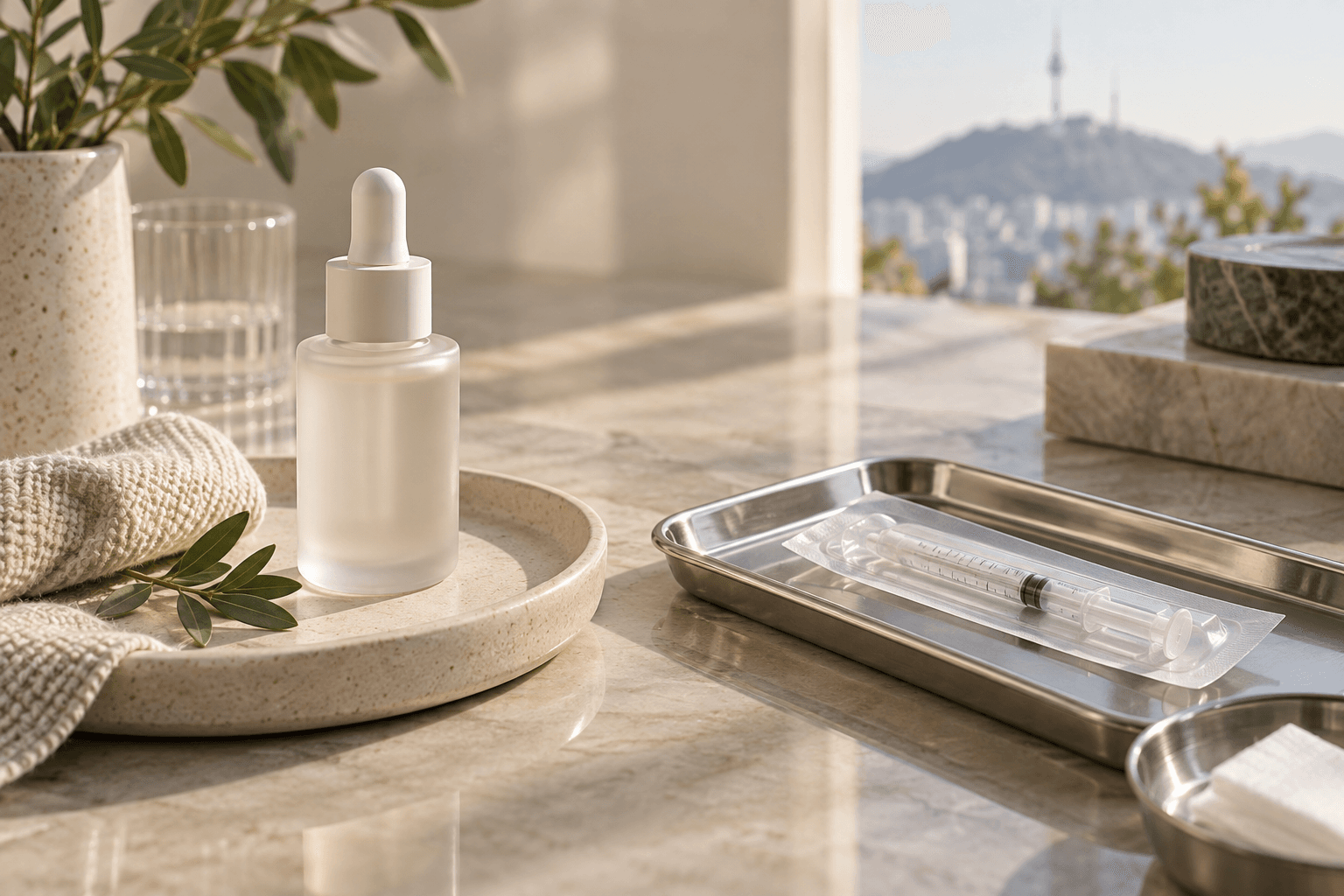
Illustrative image · not a patient result or partner clinic
English audio. AI-generated people, voices and conversation; fictional characters, not patient testimony.
What is a PDRN serum useful for?
Think everyday skincare: skin that feels dry, tight or rough from dryness. Look at the whole formula, including moisturizing ingredients such as hyaluronic acid or ceramides, rather than choosing by the PDRN label alone. Hydration can make skin feel softer and look temporarily plumper; that is different from treating persistent fine lines.
A serum may be an optional part of your routine. A suitable moisturizer and sun protection still matter; you do not need a PDRN product specifically to care for dry skin. If a new product stings or irritates, stop using it.
What does Rejuran add?
Here, Rejuran means the injectable PN treatment, not the brand’s skincare products. It places polynucleotides into the skin through injections. The aim is improvement in skin quality, including rough texture and fine lines, rather than just the immediate feel of moisturized skin.
Clinical studies of PN injections report promising changes in wrinkles, texture and elasticity. However, studies are generally small and use different protocols, so the size and duration of benefit vary. Several sessions may be proposed, with gradual assessment rather than an instant or guaranteed result. It is not automatically the best option for every kind of wrinkle.
Why does “salmon DNA” not mean the same result?
PDRN and PN are related DNA-derived materials, but the ingredient name is only part of the story. The finished formulation, concentration and delivery method matter. A cosmetic applied to the surface and a medical product injected into skin have different uses.
So choose by the problem you want to address: daily hydration and comfort, or a consultation about persistent texture and fine lines. The useful comparison is between those goals—not between two bottles or syringes that share a nickname.
When should I consider injections?
If dryness is your main concern, start by reviewing your daily skincare. If texture or fine lines remain a concern, a qualified clinician can assess whether PN injections or another approach fits your skin and priorities. A serum and a procedure can serve different roles; you do not have to progress from one to the other.
Before booking, discuss pain control, temporary redness, swelling, raised injection marks and bruising, as well as less common complications such as infection or allergic reactions. Ask about sessions, total cost, recovery time and follow-up after travel. Do not inject cosmetic serums.
Questions to take to your consultation
Keep these questions handy when you speak with a clinic.
- Is my concern mainly dryness, fine lines or something else?
- Which exact product would you use, and what change is realistic for me?
- How many visits, what total cost and what recovery time should I plan for?
Sources and evidence
External resources in English- [1] AAD: choosing a moisturizer
- [2] PharmaResearch: Rejuran PN product identity (manufacturer)
- [3] 2025 systematic review: effectiveness of PN in aesthetic medicine
These external resources offer general background. They do not verify a Korean clinic or approve a particular treatment for you.
General information, not a personal treatment recommendation. Images are AI-generated illustrations, not patient outcomes.